What is Odoo: an overview of the ERP system
If systematizing processes is an urgent need for your business, then Odoo is one of those systems that will best suit your business.
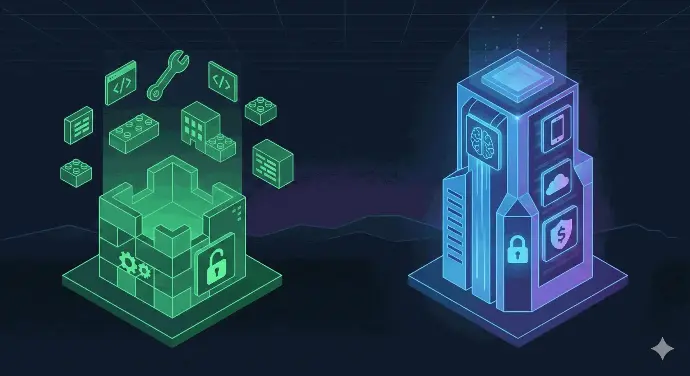
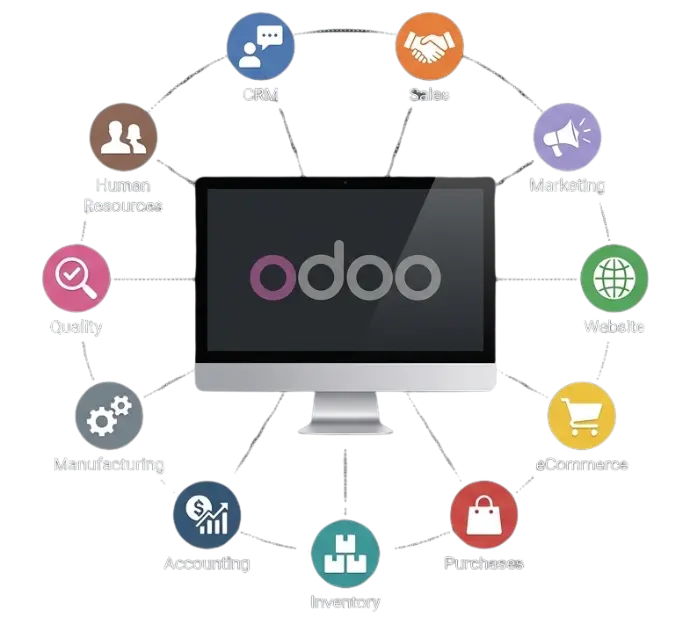
Odoo is a modern ERP/CRM system for business automation. In short, what is Odoo? It is a program that integrates sales, finance, warehouse, production, marketing and human resources management into a single system. When companies start looking for, how to grow faster, how to get rid of repetitive tasks that eat up hours every day, or how to put things in order in processes, that's when the demand for systematization arises - and here Odoo becomes a solution that replaces chaos with transparent management and automation.
Odoo appeared in 2005 as TinyERP. As the functionality developed, the program was renamed OpenERP, and in 2014 the platform received the name Odoo, which the whole world knows.
Today, the Odoo is used 13+ million users in over 120 countries and is on the list of the fastest growing ERP platforms.
Today, the Odoo is:
18 years old
platform development
500 000+
companies working in Odoo
30 000+
Adaptive modules in the marketplace
30+ industries,
which are automated through Odoo
Versatility in different industries
Odoo is a platform that is ideal for companies where it is important to manage sales, warehouse, finances, logistics, production, or projects - in one system.
Retail and wholesale trade
Control of balances, purchases, margins, and POS — in a single ERP.
Logistics and transport companies
Delivery statuses, routes, warehouses, integrations with postal services.
Manufacturing companies
Production planning, batches, operations, raw material accounting and costing.
Service and consulting agencies
Transparent time tracking, invoicing, project and task management.
IT companies and agencies
Project management, sprints, tasks, financial control, and CRM in one tool.
B2B and distribution
Orders, warehouse, document signing, finances, and client communication — without chaos in services.
What Odoo automates
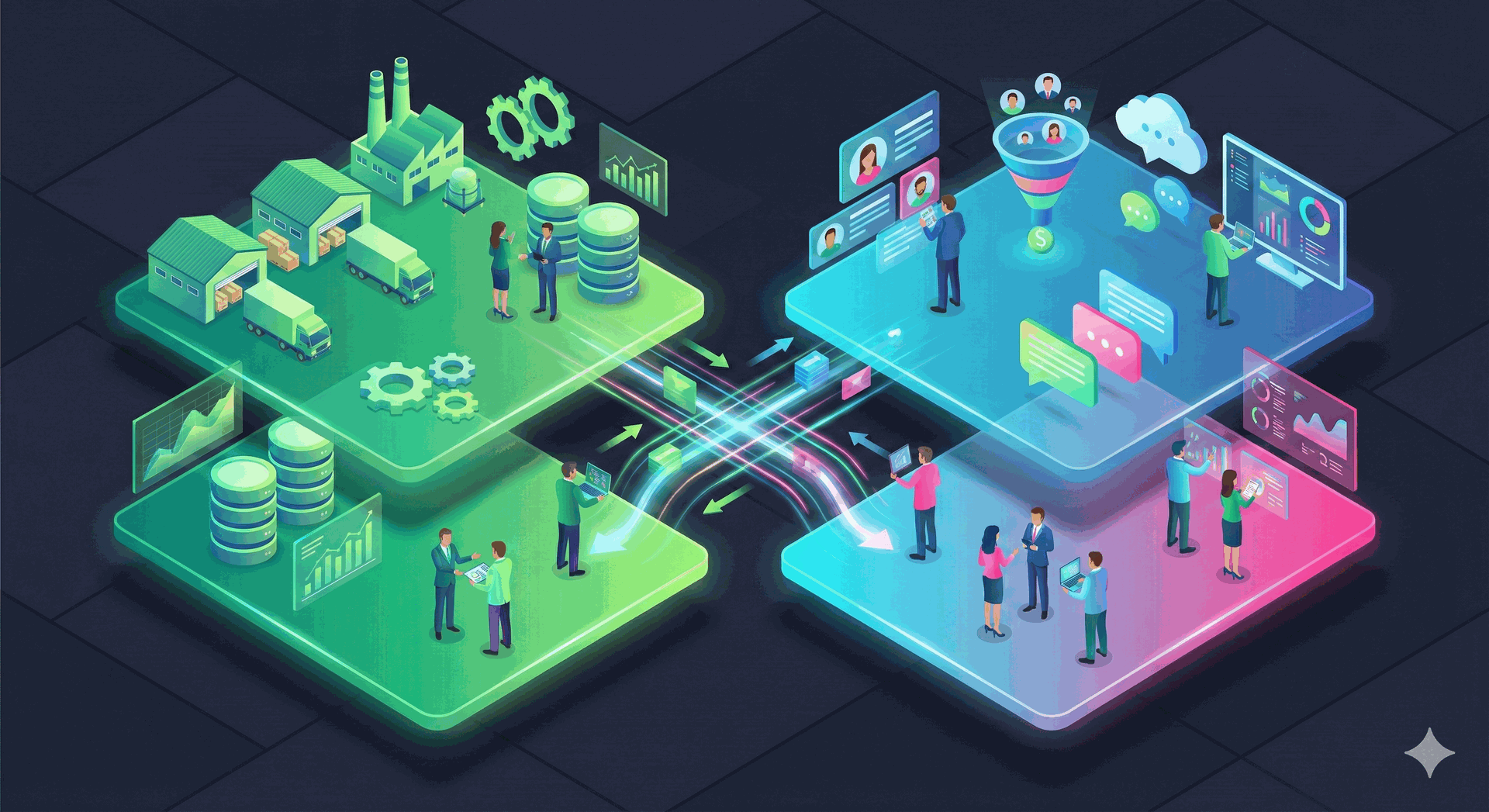
Odoo is a system that combines all the key processes of a company into a single system: from the first contact with the client to the final payment, from procurement to production.
Sales and CRM
Manage leads, deals, communications, and commercial offers. Automatically create invoices, sign documents, and track sales stages.
Warehouse and logistics
Control of balances, batches, serial numbers, routing, picking, reservations. Integration with deliveries (NP, Ukrposhta, DHL, FedEx), automation of shipments.
Procurement
Automation of orders to suppliers, control of deadlines, planning of purchases. A single picture of suppliers, prices, deliveries and statuses.
Production (MRP)
Routes, operations, production plans, raw material and stock control. Cost calculation, demand forecasting, work center planning.
Finance and accounting
Invoices, payments, acts, analytical accounts, budgeting. Integrations with banks, automatic statements, control of debtors and creditors.
Marketing and communications
Email/SMS campaigns, segmentation, push notifications, newsletter builder. Analytics, auto-funnels, automatic reminders to customers.
Projects and operational processes
Task management, milestones, sprints, time tracking. Automatic work distribution, deadline control, transparency for the team.
HR and team management
Employee onboarding, vacations, schedules, salaries, expenses, working hours. Assessments, KPIs, role-based access and the full cycle of work with personnel.
Document management and integrations
Document storage and signing, AI recognition, file management. Integrations with websites, marketplaces, telephony, and financial services.
Benefits you will get from Odoo:
1. A flexible system that adapts to your business
Your processes don't need to be "broken" for the system. Odoo adapts to your work logic.
- modules easily "fit" into real processes, without forcing you to change the entire business
- the interface is customized for specific roles to make it convenient for everyone
- the functions are connected exactly those that are needed now
- processes reflect the real order of your team's actions
Result:
System Odoo doesn't add to chaos — it structures what's already there and removes the unnecessary.
2. Implementation within the expected timeframe
Odoo is designed to be launched without months of preparation. Thanks to the proven methodology in our company, we avoid unnecessary developments, unnecessary agreements and delays. You get all the benefits of Odoo:
- ready-made industry modules allow you to launch without unnecessary development
- modularity eliminates cumbersome and lengthy implementations
- logical structure reduces errors and rework
- the system already contains most of the typical business processes that can be adapted
Result:
The company reaches a new level of systematicity in just a few weeks, not in half a year.
3. Transparency and control: finally you can see what is happening in the business
If you are tired of managing "blindly" - Odoo provides an X-ray of your entire business.
- up-to-date data on sales, finances, warehouses, production
- dashboards for the manager and each department
- real-time data
- there are no contradictory documents and different “versions of the truth”
Result:
You have the whole picture: what works, what “sags” and what is worth scaling.


4. Increasing productivity and process speed
Most processes are slowed down not by people, but by routine, repetitive tasks. Odoo removes them:
- applications, documents and orders are processed faster
- tasks are assigned automatically
- everyone knows what to do now and what to do next
- the team works according to a single logic, not “as usual”
Result:
Less confusion, less stress, more steady movement forward. The leader sees real progress.
5. Fewer errors, less duplication, less money lost
Manual work is a major source of errors. Odoo takes it out of the way where it doesn't make sense.
- the system automatically pulls up the data
- duplication is impossible — everything is in a single database
- documents don't get lost in chats
- information is relevant in all modules simultaneously
Result:
The business loses less: from incorrect orders, errors in documents, unnecessary purchases, or irrelevant balances.


6. A system that grows with the business — not limits it
In most companies, software prevents scaling. Odoo is the opposite.
- add new modules as you grow
- expand your teams without losing speed
- connect branches and directions - everything works in one system
- no need to change ERP as you grow — just expand
Result:
The system does not limit development. It supports it.
Odoo integration with other systems
Exchange rate
- NBU
- Monobank

Payment acquiring
- LiqPay
- WayforPay
- EasyPay

SRS
- Checkbox
- Checkbox for POS

Telephony
- Binotel
- Phonet
- Ringostat
- Kyivstar
- Confluence
- Telephony

Marketplace
- Prom
- Rozetka
- AliExpress
- eBay
- Etsy
Projects and analytics
- Jira
- Confluence
- Google analytics
- Google Sheets

Communication
- Viber
- Telegram
Postal service
- Nova Poshta
- CAT
- Amazone
- Meest
Banks
- Privatbank
- Monobank
- With other banks
What sets Odoo apart from other ERP systems?
Odoo is chosen not because it is a “cheaper ERP.” But because it is a system that allows businesses to grow — without excessive costs, without overloading the team, without rigid frameworks, and without losing flexibility.
It combines the strengths of large ERPs with the simplicity and modularity of modern solutions.
- modules can be combined and adapted to the specifics of the industry
- processes are easily reconfigured without deep redesign
- integrations with websites, marketplaces, delivery services and financial systems are done faster
- business is not tied to one supplier — open source gives freedom of choice
- the system grows with the company: you can gradually add functions and directions
- Investments in implementation and support are several times smaller
- no expensive licenses that eat up the budget every year
- implementation takes less time and resources
- the system pays for itself faster — often within the first year
- minimal employee resistance to implementation and training
- the interface is understandable even for people without technical experience
- all modules look unified and logical — there is no “zoo” of interfaces
- it is easier for managers to monitor work in real time
- the system regularly receives new features
- UX, performance, and security are improved
- integrations and modules are updated along with the platform
- you are not working in an outdated ERP and are not technologically lagging behind
- system development does not require expensive and long migrations
- AI works in all key modules: CRM, HR, finance, documents, marketing, warehouse
- automatically generates descriptions, letters, templates and internal documentation
- analyzes documents, invoices, payments and makes recommendations
- helps with forecasting and reporting
- updated annually with the main Odoo release, at no additional cost
- available “out of the box” — without separate expensive modules, add-ons or licenses
Odoo security and reliability
The Odoo system meets international security standards, runs on certified infrastructure in the EU/USA, provides data encryption, access control, and high fault tolerance.
👉 Read the detailed review:
Any questions left?
Leave your contact details and our manager will contact you to clarify any questions or schedule a Demo with an expert.