ERP and CRM system
for an online store
Complex automation of the online store — from processing orders from the website to warehouse accounting, finance and document management. Odoo is the best software for a company that grows with your business.
Why Odoo is it more, than just CRM for online stores?
Unlike conventional accounting systems, Odoo is a full-fledged erp system for online stores. It combines all processes: sales, purchases, warehouse and accounting in a single window.

CRM for marketplaces and site
Collect orders from Rozetka, Prom, Shopify, social networks or your own website in one database.
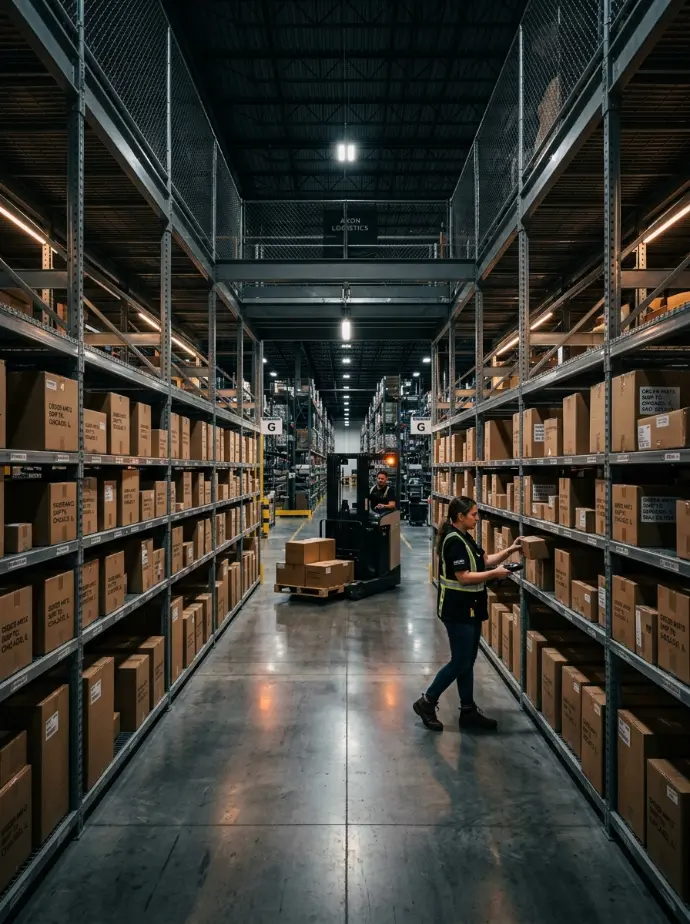
CRM for an online store taking into account the composition
Forget about reordering or selling missing goods.Sales automatically remove the product from the warehouse in real time.

Automation of document flow
Generation of TTN, invoices, expense invoices and PRRO checks in one click.
Odoo features for your online store
CRM for processing orders from the site
All communications (messengers, mail, calls) and orders are in a single interface.Automatic distribution of leads between managers and a convenient sales funnel.


CRM for warehouse and commodity business
Full residue control.The SRM system for commodity business allows you to keep track of batches, serial numbers, manage several warehouses and track the movement of each product from the supplier to the customer.
Automation of work: synchronization with the supplier
Set up automatic restocking.The system itself will create a purchase order (Dropshipping or classic warehouse) when the product runs out and update the prices.


Finance and Accounting
You no longer need to transfer data to separate accounting programs.The program for the store and the back office are combined: control income, expenses, profitability of orders and payment of taxes.
Comparison CRM systems for an online store
Many business owners start with simple solutions, but as their business grows, those tools often become too limited. Let’s compare the cloud-based Odoo ERP with other systems.
Feature
Odoo ERP
Specialized SRM
(KeyCRM, SalesDrive)
Legacy accounting systems
(BAS / 1C)
Primary focus
Order processing, marketplaces entire business
Accounting and inventory management
Comprehensive business management
Inventory management
Detailed
Advanced: batches, serial numbers
Accounting and Finance
Integrated: P&L reports, cash flows
Limited or very basic
Advanced, but complex to use
Document management & fiscal receipts
Automated in one click, fiscal receipt generation
Basic: simple stock write-offs
Basic
Complex interface
Supplier synchronization
Built-in automated purchasing logic
Often requires third-party services
Requires custom development
Scalability
High: manufacturing, HR, retail, and more Retail)
Limited mainly to e-commerce
Complex and costly to upgrade
Cost of customization
Flexible thanks to modular architecture
Lower cost, but limited capabilities
Expensive and time-consuming
As cooperation with us is underway
Your way from an application to a working system — 5 clear steps
1
Expert meeting and demo
We analyze your tasks with a business analyst and conduct a demonstration of Odoo's basic functionality.
2
Business analysis (Discovery)
We study your processes and prepare a requirements document (BRD) and a GAP analysis of system capabilities.
3
Assessment and Roadmap
We provide a transparent calculation of the budget, terms and form a step-by-step plan (Roadmap) for the implementation of the project.
4
Staged launch
A dedicated team (BA + PM + Dev) configures the system in short sprints according to a clear methodology.
5
Training and launch (Go-Live)
We carry out the onboarding of your team, migrate data and put the system into real operation.

Evgeny Zahoruyko
FOUNDER AND CEO OF CODOO ERP
Automation of online store processes: The path to leadership in a niche
Modern e-commerce requires impeccable order processing speed.Reliable CRM for stores and commodity business is the only way to exclude the influence of the human factor on your sales.
The main benefit CRM systems for an online store based on Odoo is that it is a single integrated ecosystem.Whether you're looking for an easy cloud CRM for an online store, to process applications faster, or do you need comprehensive ERP for an online store with full warehouse, finance and logistics management — the Odoo architecture flexibly adapts to these tasks.
Our mission is to adjust the system so that it ceases to be just a "database" and becomes your main tool for systematic profit growth.
How much does Odoo-based automation cost?
The project cost depends on your business scale and specific requirements
Get a personalized calculation
Schedule an online meeting to receive a tailored estimate of the project budget and timeline.










What our clients say
Frequently questions
Yes. Odoo can be integrated with an existing website via API, or you can use Odoo’s built-in eCommerce module. Orders, customers, products, inventory, and other data can be synchronized automatically between systems.
Yes. Odoo Inventory provides real-time stock tracking, supports multiple warehouses and locations, and allows businesses to configure replenishment rules and product routes. This helps reduce stockouts, overstocking, and manual inventory updates.
Yes. Odoo can be connected with shipping and delivery providers to automate shipping rates, transfer order data, and generate shipping labels. The available integrations depend on the country, carrier, and specific business requirements.
Yes. Odoo supports integration with payment providers, allowing businesses to accept payments through an online store or customer portal. Available payment methods depend on the selected provider and market.
Yes. Odoo can connect e-commerce operations with marketplaces through native connectors or custom integrations. This makes it possible to synchronize orders, products, inventory, and other data across multiple sales channels from one system.
Odoo can automate the entire order workflow — from sales confirmation and stock reservation to picking, delivery, invoicing, and payment tracking. This reduces manual data entry and keeps every stage of the order in one system.
Yes. Odoo’s modular architecture allows businesses to start with eCommerce, Sales, and Inventory, then add Purchasing, Accounting, CRM, POS, Manufacturing, and other modules as the company grows — without migrating to a different platform.
Ready transform your online store?
Leave a request and our experts will contact you to discuss your tasks and show you a demo version of Odoo customized for your needs.
✓ Demonstration of basic Odoo functionality
✓ Modules tailored to your requirements
✓ Your business processes modeled in Odoo
✓ Answers to questions